

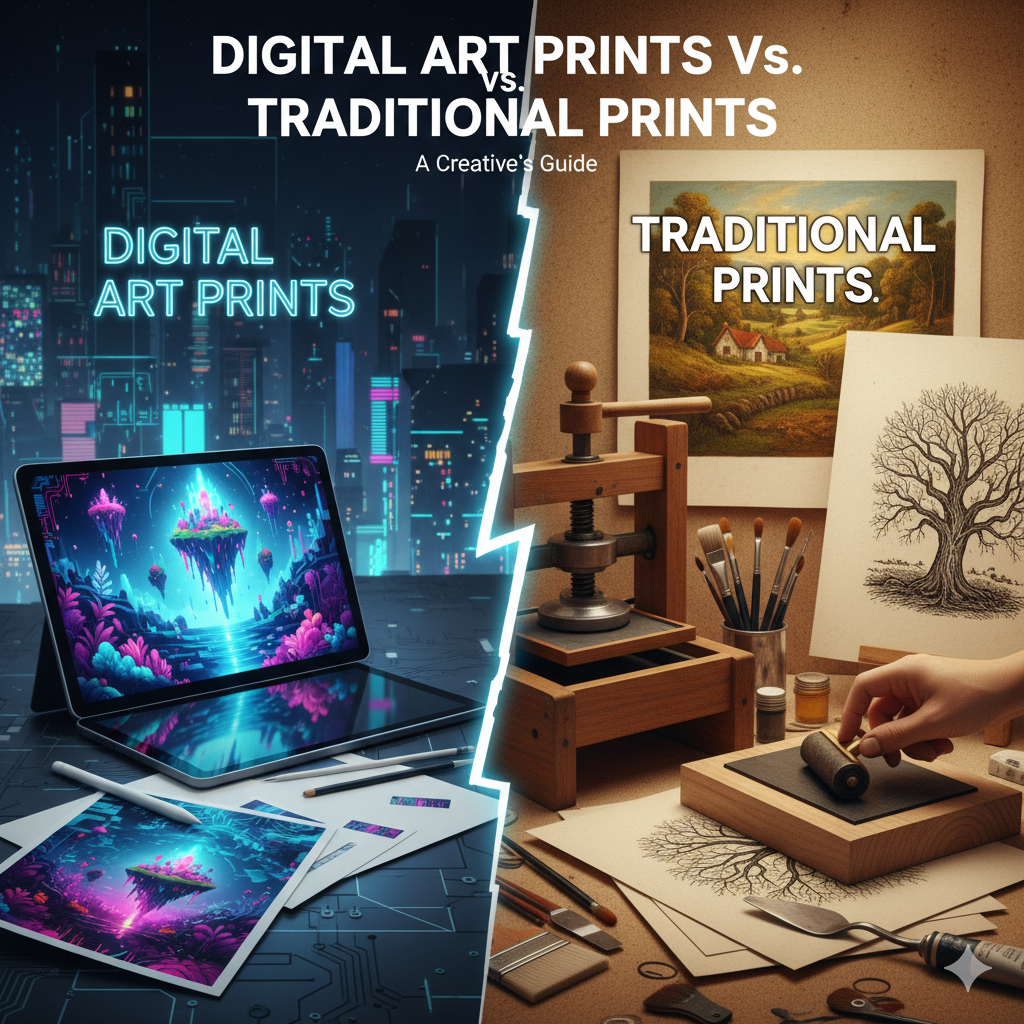
Before we compare, it’s essential to clarify what we mean by each:
1. Digital Art Prints (Print-on-Demand Art)
A digital art print is a physical reproduction of artwork that was created digitally (using software like Photoshop, Procreate, or a 3D modeling program) or a high-resolution scan/photograph of a physical artwork.
- Production: Almost exclusively produced using advanced digital printing methods, such as Giclée printing (high-quality inkjet) or photo printing, often via a print-on-demand art service.
- Key Feature: The file exists as a high-resolution digital master, allowing for instant, highly versatile reproduction.
2. Traditional Prints (Reproduction Prints)
Traditional prints typically refer to mass-produced reproductions of classic artworks or commercial prints, often created using older, large-scale printing techniques.
- Production: Commonly uses methods like offset lithography or screen printing. These methods require significant upfront setup (creating plates or screens) and are most cost-effective for large-volume, bulk production runs.
- Key Feature: Produced in large batches to stock inventory, making them widely available but less flexible in terms of size and material.
A Head-to-Head Comparison: Digital vs. Traditional Prints
The core differences between these two types of prints lie in how they are produced and the level of flexibility they offer the customer.
| Feature | Digital Art Prints (Print-on-Demand) | Traditional Prints (Offset/Bulk) |
| Cost | Affordable for Small Orders. Higher cost per unit, but zero upfront investment for inventory. | Cheapest for Bulk. Very low cost per unit for large runs, but high initial setup cost. |
| Quality | Excellent/Archival (Giclée). Fine detail, consistent color on small runs. Archival inks offer longevity. | Good/Commercial Grade. Consistent color on large runs, but may lack the subtle detail of Giclée. |
| Customization | High. Easily printed in custom sizes, on various materials (canvas, metal, paper), and in different aspect ratios. | Low. Fixed sizes and materials based on the original print run. |
| Sustainability | Higher. Print-on-Demand minimizes waste (no excess inventory), less chemical use than offset. | Lower. High paper/ink waste from initial setup and risk of large amounts of unsold inventory. |
| Ease of Purchase | Instant. Buy the file and print locally, or order a custom-printed piece online with 3-7 day production. | Standard. Ordered from existing inventory; subject to stock availability and standard shipping. |
| Value & Rarity | High availability (Open Edition). Value is in the art itself and its accessibility. | High availability (Open Edition). Value is in the established artwork it reproduces. |
1. Cost and Affordability: The Volume Factor
For the average homeowner looking for affordable wall art, the cost difference is nuanced:
- Digital Art Prints: Because they utilize the print-on-demand model, there are virtually no inventory or storage costs. You pay a slightly higher unit price for a one-off print, but you avoid the artist/publisher needing to recoup the cost of thousands of unsold copies. This makes high-quality Giclée digital art prints surprisingly affordable for short runs or single purchases.
- Traditional Prints: These are only cheaper if they are part of a massive print run (like posters or commercial reproductions). The initial cost of creating the metal printing plates for offset lithography is very high. If you are buying a standard 24×36-inch poster, the per-unit cost is rock bottom, but this efficiency is only achieved through mass production.
The Verdict: For buying unique, curated art from an independent artist in the exact size you need, digital art prints offer better value. For buying a well-known, high-volume reproduction, traditional prints are typically cheaper.
2. Print Quality and Detail: Giclée vs. Offset
The print method is the single biggest determinant of quality.
- Digital Art Prints: Relying on Giclée technology, these prints use high-resolution inkjet printers with an extended color range (up to 12 colors) and archival, pigment-based inks. This process is capable of rendering incredible color fidelity, sharpness, and a sense of depth that closely mimics the original art. When printed on fine art paper or canvas, the quality is often museum-grade.
- Traditional Prints: While offset printing offers excellent consistency across thousands of copies, the color is typically rendered using the CMYK (Cyan, Magenta, Yellow, Black) process. This limits the gamut (range of colors) compared to Giclée, and the resulting image may lack the subtle tonal transitions and depth of a fine art digital print.
The Verdict: For highest print quality, color accuracy, and longevity (archival life), digital art prints produced with Giclée technology are the superior choice.
3. Customization and Flexibility
This is where digital art prints dominate. Since the master artwork is a digital file, it can be manipulated without damage.
- Digital Art Prints: Do you need a piece printed on aluminum for a modern kitchen? Or perhaps an unusual 12×48-inch panorama for a hallway? The digital nature of the file allows for easy, high-quality printing on virtually any material and in any dimension, making them the ultimate choice for personalized décor.
- Traditional Prints: You are limited to the size, material, and finish chosen during the initial bulk print run. If you need a different size, you are out of luck.
The Verdict: For matching art to your specific space, frame, or interior design vision, digital art prints offer unmatched flexibility.
4. Sustainability and Ethical Consumption
The trend toward print-on-demand art is inherently more environmentally friendly than traditional bulk methods.
- Digital Art Prints: By printing only when an order is placed, this model virtually eliminates the single largest source of art print waste: unsold inventory. Furthermore, modern digital printers often use less harsh chemicals and offer eco-friendly paper or canvas choices.
- Traditional Prints: The offset process involves creating metal plates and requires a large number of test prints, leading to higher material and chemical waste during setup. If a publisher over-estimates demand, thousands of prints may end up in storage or, eventually, landfill.
The Verdict: If sustainability is a priority, the print-on-demand model of digital art prints is the greener choice.
🔑 Use Cases: When to Choose Which Print
The best print depends entirely on your goal for the space.
| Use Case | Best Choice | Why? |
| Gallery Walls | Digital Art Prints | The ability to choose multiple sizes, frame types, and finishes ensures a cohesive look with custom dimensions. |
| Office Décor | Digital Art Prints | Customization allows you to choose specific, sophisticated dimensions for a professional, bespoke look. |
| Gifting | Digital Art Prints | Instant downloadable prints make perfect last-minute gifts, or you can order a highly personalized, custom-sized physical print. |
| Children’s Room/Playroom | Traditional Prints | Cheaper and more easily replaced if damaged. |
| High-Traffic Area | Digital Art Prints | Can be printed on durable materials like metal or acrylic for high resistance to wear and humidity. |
| Framing a Classic Masterpiece | Traditional Prints | Widely available, low-cost reproductions of famous works. |
The modern homeowner no longer has to settle for mass-produced mediocrity. Digital art prints provide an accessible, high-quality, and customizable path to curating a space that is genuinely your own, blending artistic integrity with 21st-century convenience.
Browse our top-selling digital art prints. Click Here